
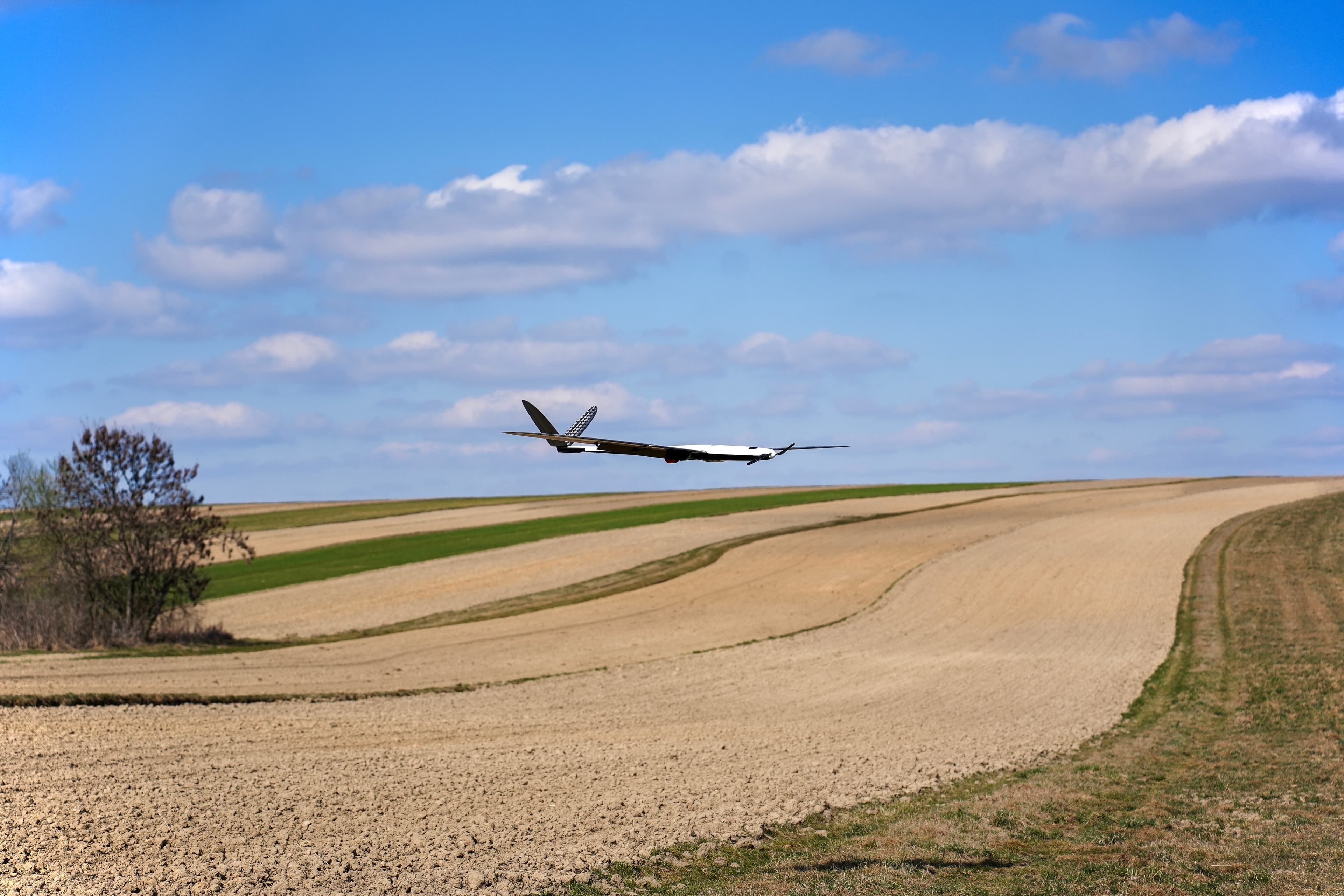
AGH Solar Plane - Rico
The plane inspired by one of the Penguins of the Madagascar, designed for special missions ;)
Want to Know More?See Rico in Action
Watch our latest test flight and development progress
UAV Overview
Airframe & Weight
Wingspan
3020 mm (118.9 in)
Length
1480 mm (57.27 in)
Empty Weight
2.5 kg (without airdrops and battery)
Take-off Weight
4.1 kg (with airdrops and battery)
MTOW
4.5 kg (Maximum Take-Off Weight)
Flight Performance
Cruise Speed
25 m/s (60 mph)
Never Exceed Speed
90 m/s (201 mph)
Stall Speed
16 m/s (35.8 mph)
Stall Speed (with flaps)
9 m/s (20.1 mph)
Power & Endurance
Max Flight Time
~50 minutes at cruise speed
Theoretical Range
75 km (46 miles)
Power Unit
Two 3S2P Custom Li-Ion batteries, 17.6 Ah total capacity
Propulsion System
Motor
Leomotion L3025-4550-V2 Brushless DC
Motor Power
1000 W
Motor KV
4550 U/V
Motor Gear
6.7:1 multiplanetary gear
Propeller
16x10" or 18x10" Folding Prop
ESC
Dualsky Summit 60A
Avionics & Comm
Flight Controller
Mateksys H743-Wing
Telemetry
Mateksys MAVLink mR900-30 (915 MHz)
Radio Control
Radiomaster RP1 2.4GHz ELRS
Navigation
Foxeer M10Q 250 (L1 band, multi-constellation)
Airspeed Sensor
Matek Digital Airspeed Sensor ASPD-4525
Range Sensor
Lidar TF Luna (for autonomous landing)
Compute & Perception
Companion Computer
NVIDIA Jetson Orin Nano
Primary Vision
AR0234 Global Shutter Color Camera
Rico's journey
The evolution of the Rico fixed-wing UAV through time
The birth of Szczerbatek - the blueprint for Rico
Szczerbatek, an unmanned aircraft, takes shape and becomes the design reference for Rico. The experience gained through its design, construction, and flights forms the foundation on which the new, improved aircraft is built.
The decision to build Rico
The team decides to build an improved successor to Szczerbatek - Rico - with the 2026 SUAS competition in mind. It sets out the goals for the search-and-rescue and mapping missions, along with the design direction: a light, fast, and agile aircraft capable of sustained autonomous flight.
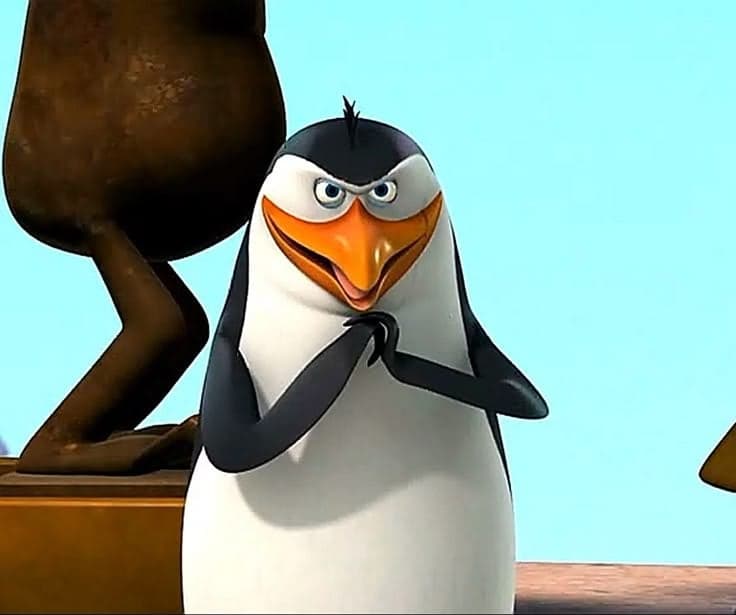
Design refinement and optimization
The team analyses experience and flight data from the previous aircraft to identify what worked well in practice and what needed improvement. Szczerbatek's proven aerodynamics are largely retained as a reference point, and the work focuses on refining details and addressing the weak spots found during testing. The most significant change is a redesigned tail, whose new geometry reduces play and hinge wear and improves control precision and a new payload drop system.
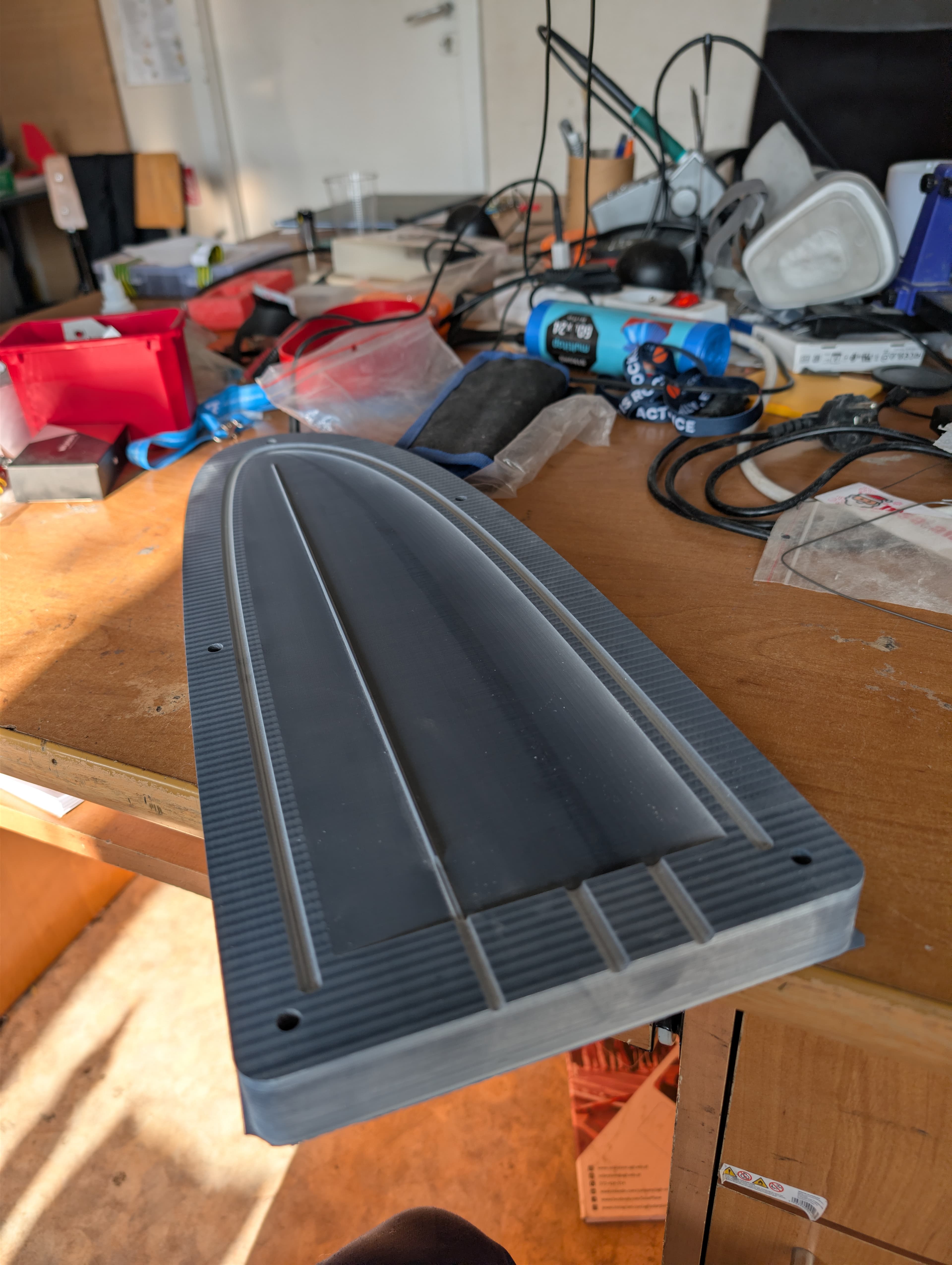
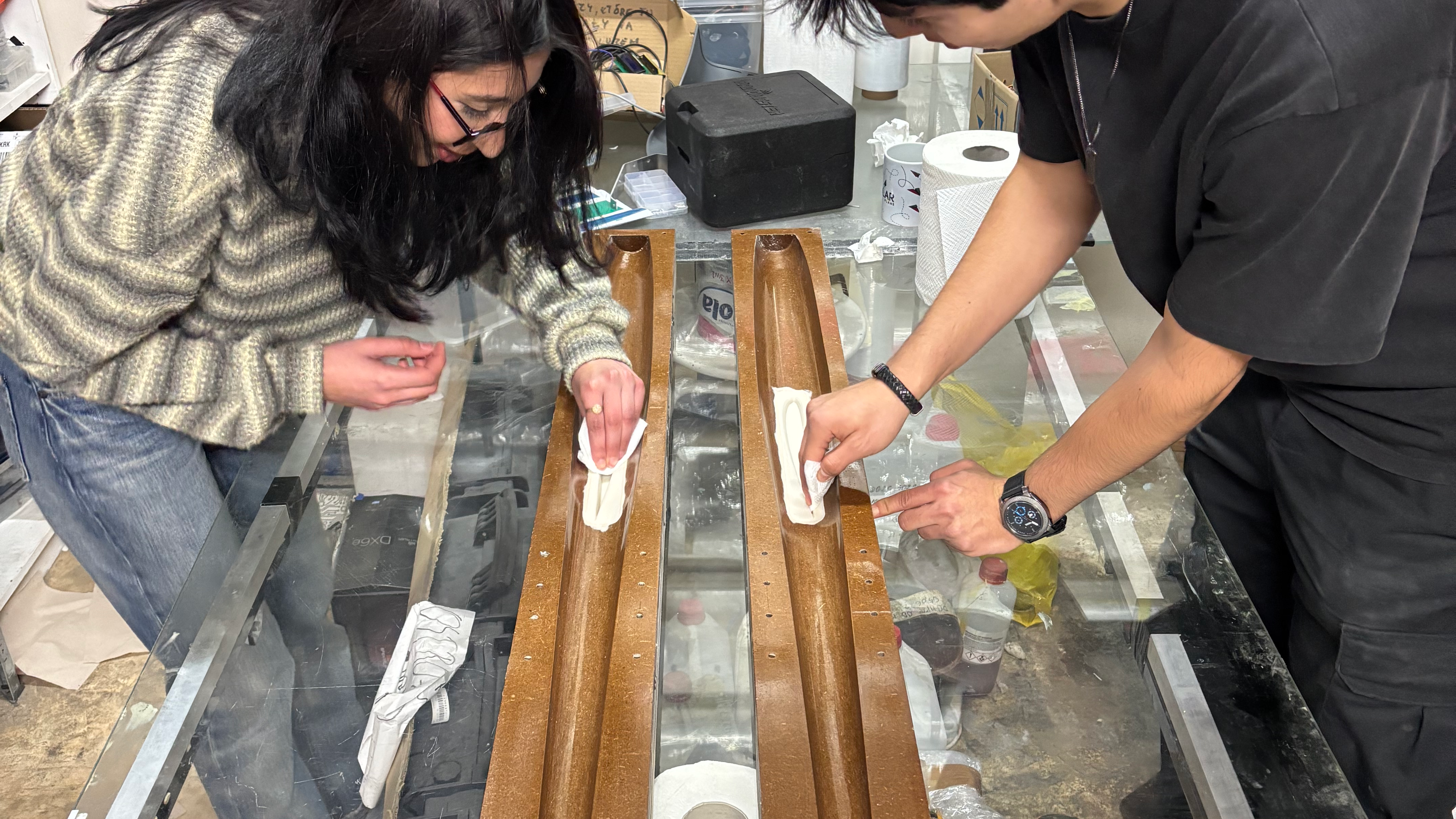
CNC mould preparation
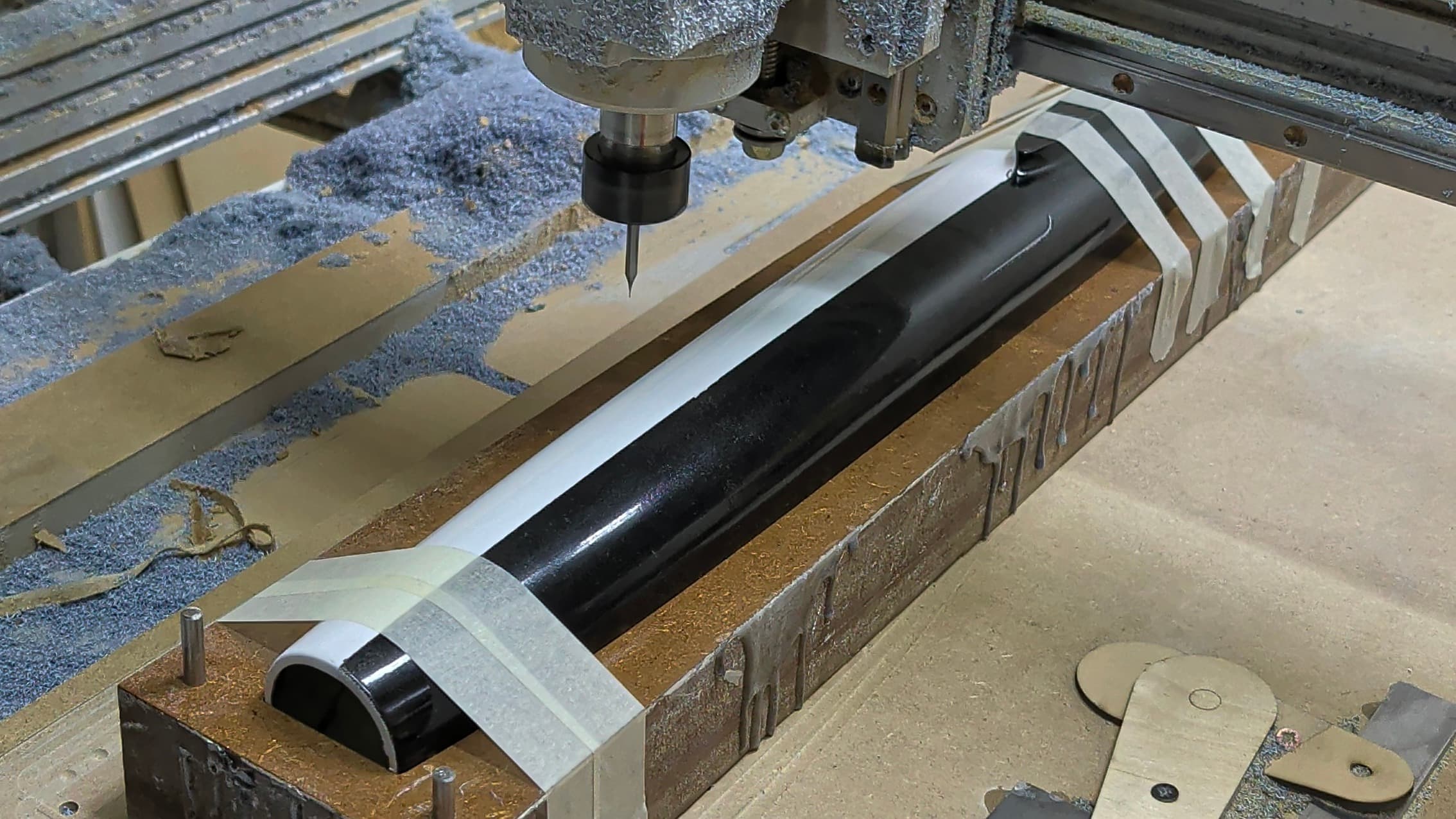
Precise moulds for the structural components are prepared for usage - first the fuselage, then the wings and tail. Depending on the part, the moulds are made from polyurethane board or MDF. The moulds are cleaned, sanded, and coated with a release agent to ensure the carbon fibre parts can be removed without damage.
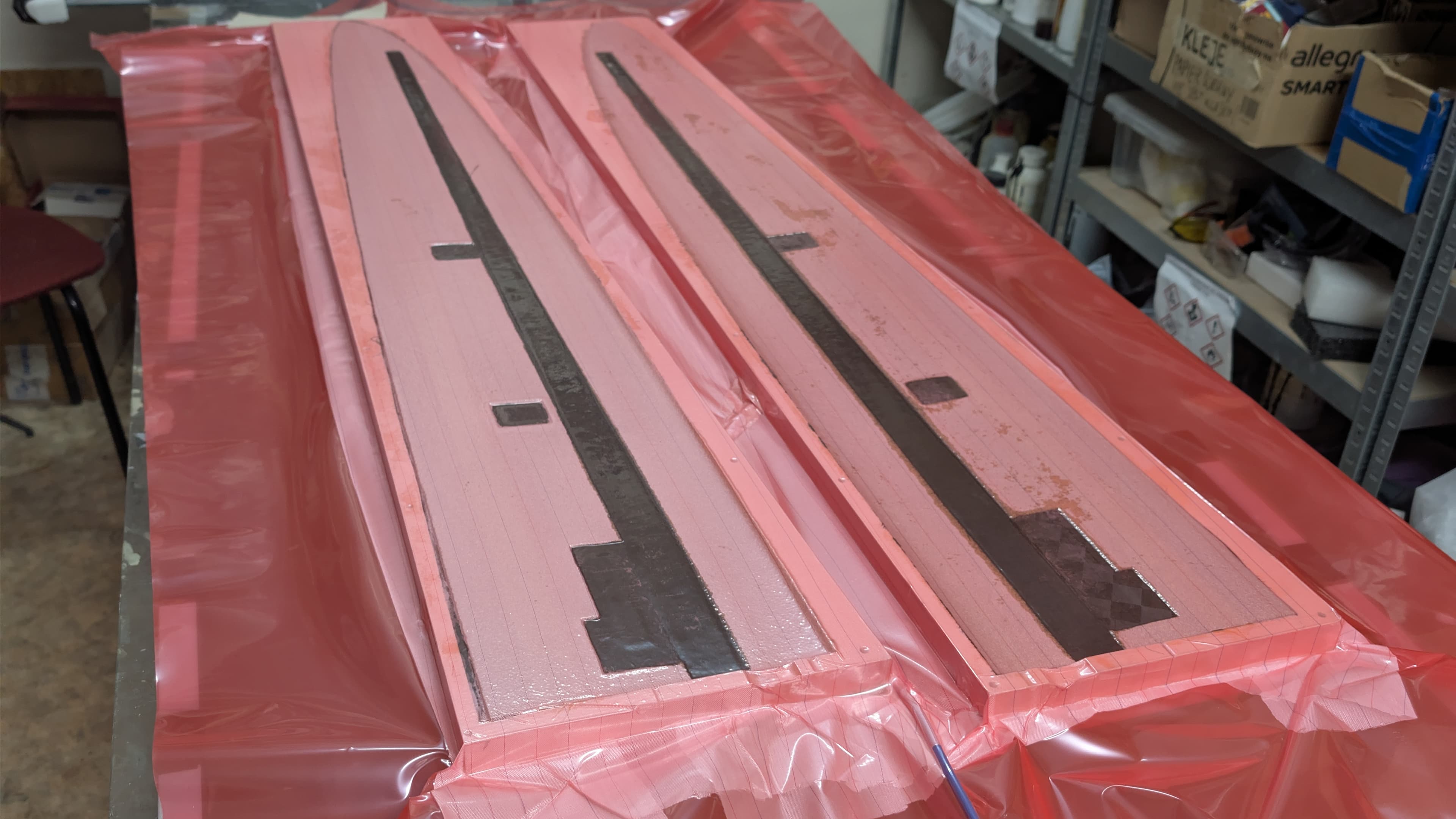
Wing and spar lamination
The wings are vacuum-laminated from carbon fibre and bonded to a spar reinforced at its mounting point. The process keeps the structure light while maintaining high strength.
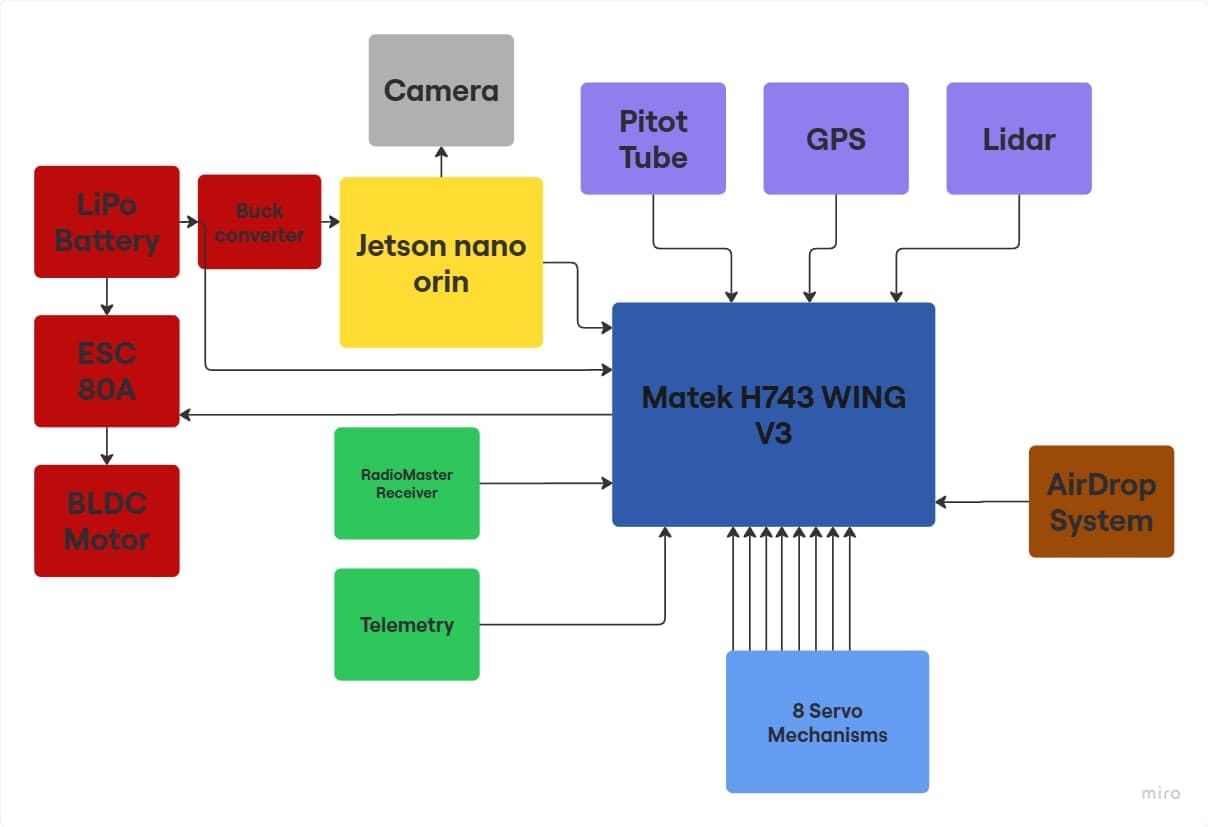
Electronics and avionics
The team integrates the avionics around the flight controller. Separate control and telemetry links are established, and the key components are mounted in modular, 3D-printed brackets that allow rapid field replacement.
First prototype testing
The first complete prototype, with full onboard electronics, comes together. The team runs initial trials to verify subsystem integration and the aircraft's readiness for its first flights.
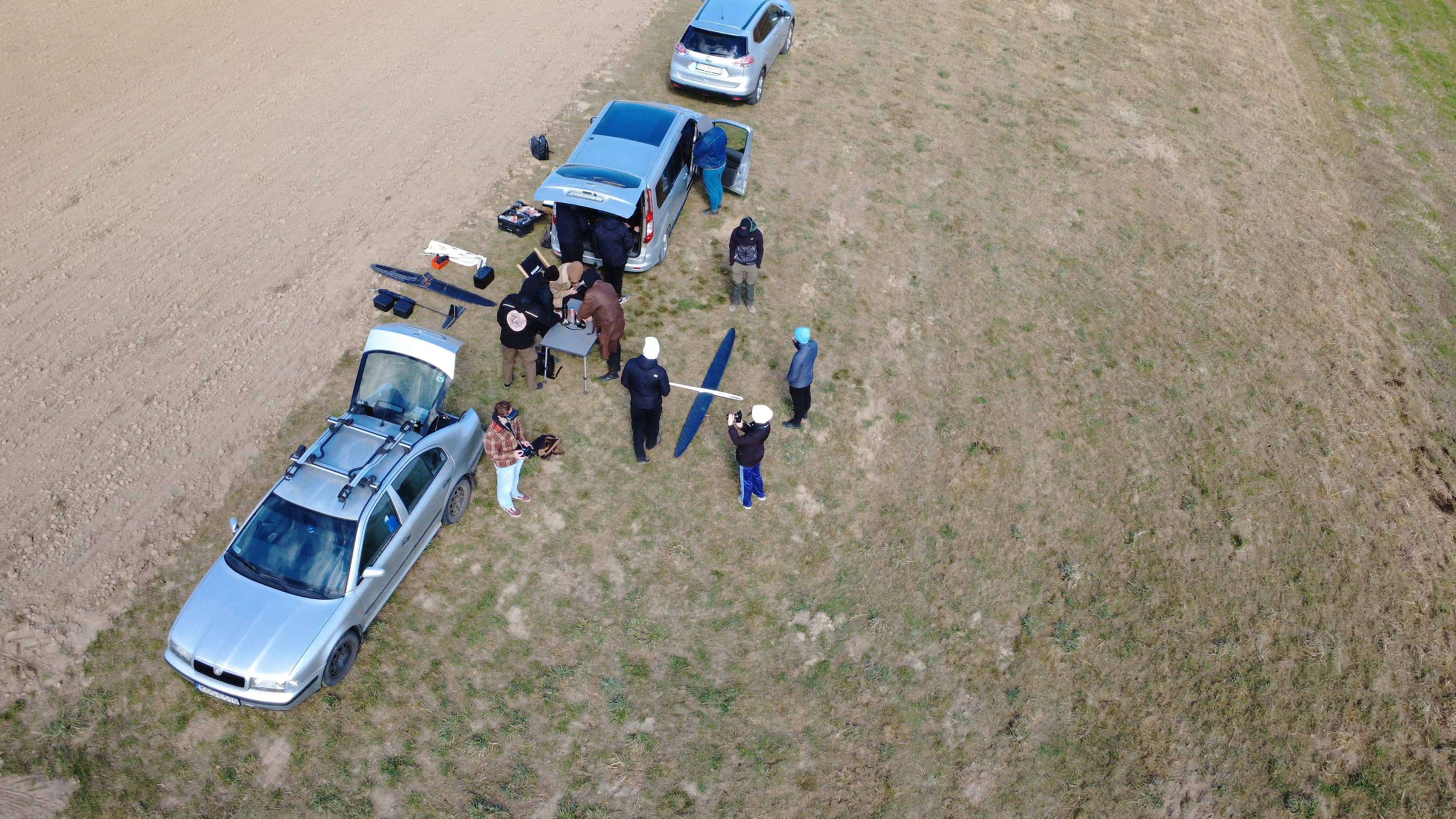
Airframe testing and autonomy tuning
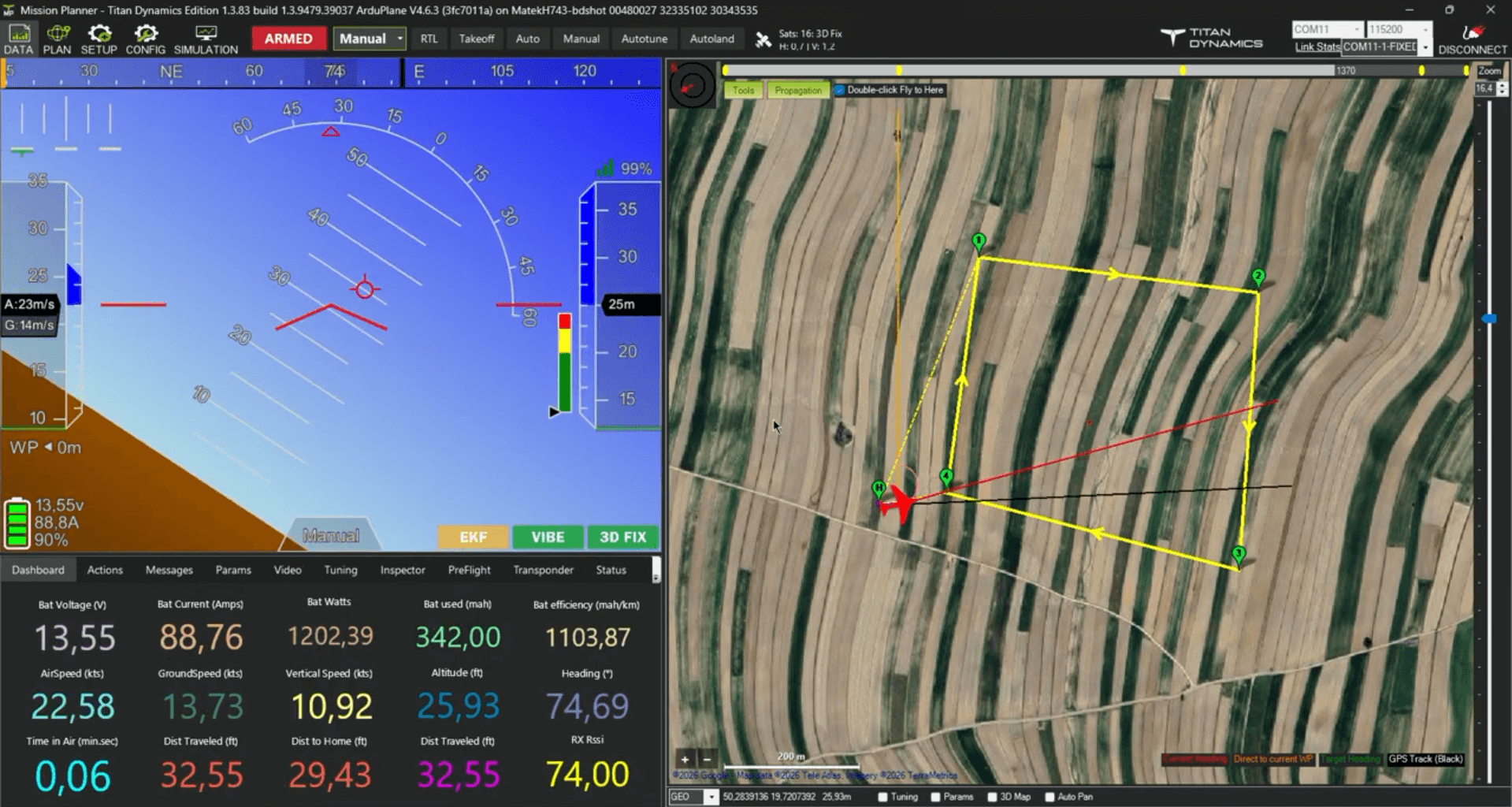
Test flights are combined with autopilot and autonomous-mode configuration. In parallel, the safety systems are set up and verified.
Building the second aircraft
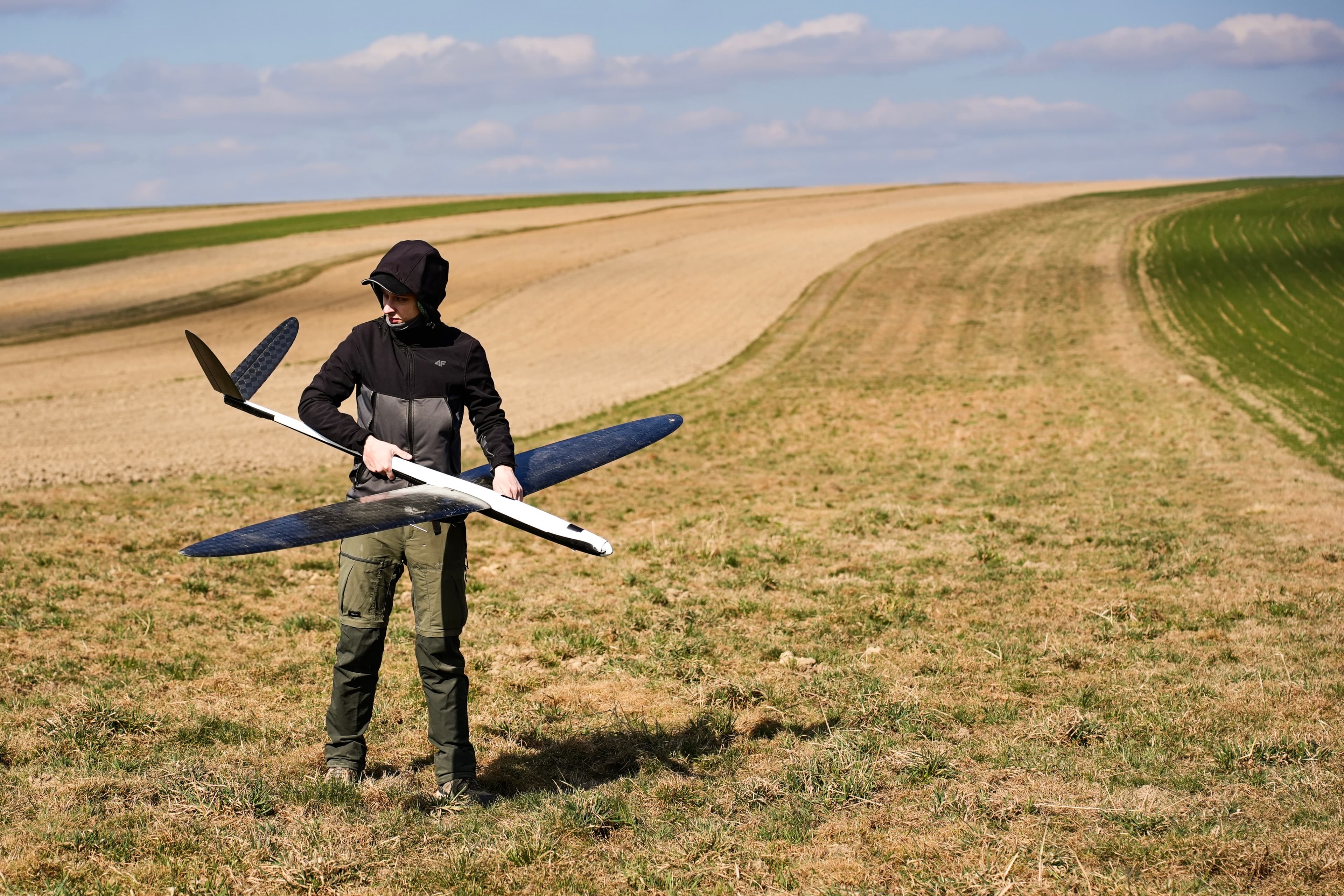
Alongside testing, a second copy of the aircraft is built. The spare improves the team's operational reliability and keeps trials running without downtime if the first aircraft is damaged.
Continuous testing and integration
Regular test flights and onboard-system integration continue. Using flight logs and telemetry, the team makes iterative improvements that steadily raise the aircraft's reliability and performance.
Software development and data collection
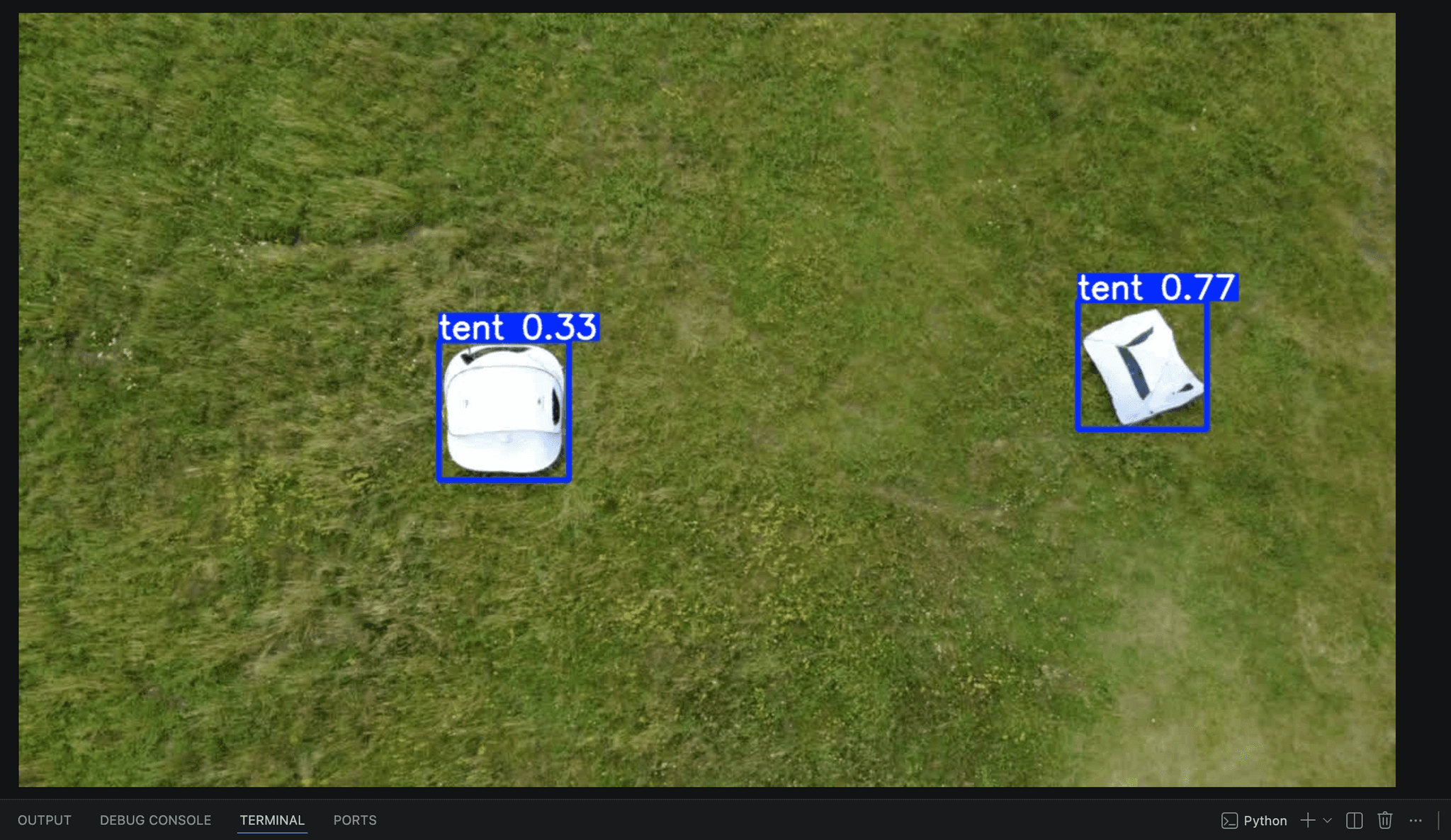
The team builds its dataset and trains and tests object-detection models. Mapping and detection algorithms are developed, along with the communication between the aircraft and the ground station.
SUAS 2026, USA
The team will present Rico and fly its planned mission at the international Student Unmanned Aerial Systems competition in the United States - the central goal of the entire project.
Meet Our Team
A group of students at AGH University of Krakow who brought Rico to life - the fixed-wing aircraft for SUAS 2026, from a sketch to the flight line.
Project Management Division
Responsible for the budget and grant gathering, competition logistics, documentation, and coordination between the technical divisions.
Marta Łopusiewicz, Klaudia Janik